

Last Updated: November 1, 2026
Quick Summary
To remove fish smell from clothes, blot fresh spills, rinse with cold water, and pre-soak in cold water with half a cup of vinegar for 30 minutes before washing separately with heavy-duty detergent. Keep garments away from heat until the odor is gone, because heat sets the smell in.
- Blot spills with a clean towel and never rub, which pushes fish oils deeper into the weave.
- Add one cup of white vinegar to the rinse cycle, or soak in half a cup for 30 minutes.
- Never mix vinegar with chlorine bleach, because the combination releases a harmful gas.
- For fish grease, apply dish soap to the spot before washing and skip the dryer until the smell is gone.
- Air-dry fishy garments first, since a clothesline beats a hot dryer for odor removal.
Table of Contents
- Start With the Care Label and a Fresh Spill Plan
- How to Use Vinegar in Laundry for Odor
- Why Clothes Smell Fishy After Washing
- How to Remove Fish Grease Smell From Clothes
- Dry Thoroughly and Know When to Stop Treating
- Shop Odor Eliminators Built for Fish and Gear
- Frequently Asked Questions
Start With the Care Label and a Fresh Spill Plan
A fish smell on clothes comes from trimethylamine, an odor-causing compound that clings to fabric fibers and gets stronger as it dries.
How to remove fish smell from clothes after a spill: blot the area, rinse it with cold water, and keep the garment away from heat until the odor is gone.
Fresh spills are winnable. Set-in odors take more passes. That difference decides your whole plan.
Rinse and Blot Before Anything Else
Blot first, then rinse. Press a clean towel into the spill to lift the fish oils. Do not rub, because rubbing pushes the oil deeper into the weave. Rinse the spot under cold running water from the inside out.
Watch out: hot water at this stage opens the fibers and locks the fish smell in. Cold water keeps the oils on the surface where you can lift them.
Wash Separately to Stop Odor Transfer
Wash fishy garments alone. One smelly shirt in a full load can pass the odor to everything in the drum. Check the care label for the wash temperature and fabric limits before you commit.
- Keep fishing clothes in their own load
- Turn garments inside out
- Empty pockets of bait, wrappers, and hooks
How to Use Vinegar in Laundry for Odor
Vinegar is a common choice for fish smell in laundry. Its acidity can help break down the compounds behind fishy odor, and it rinses out clean.
The basic dose: add one cup of white vinegar to the rinse cycle, or soak the garment in a sink of cold water and half a cup of vinegar for 30 minutes. Never pour vinegar directly onto delicate fabric, dilute it first, and check the care label.
Fabric-by-Fabric Vinegar Guidance
Not every fiber tolerates acid the same way. Use this as a starting point, then defer to the care label.
- Cotton and linen: most tolerant. A one-cup rinse or a 30-minute half-cup soak is generally safe. Hot water is fine if the label allows it.
- Synthetics (polyester, nylon, spandex): vinegar is safe, but these fibers hold odor longer. Expect to repeat the soak. Avoid high dryer heat, which can bake the smell in.
- Wool: acid is generally kind to wool, but agitation and temperature swings are not. Use a cool, short soak with half a cup of vinegar and no wringing. Lay flat to dry.
Baking Soda, Activated Charcoal, and What to Mix
Baking soda absorbs odor, and activated charcoal pulls odor-causing compounds out of the air around stored gear. Both are safe additions. Mixing them with vinegar is not.
- Vinegar plus baking soda: they cancel each other out. Use one per wash, not both.
- Baking soda: add half a cup to the wash drum with detergent.
- Activated charcoal: keep a pouch in the gear bag or closet, not in the washer.
A Simple Ordered Protocol
Rather than treating each remedy as a separate trick, run them in sequence. This order works for most washable garments:
- Blot a fresh spill with a clean towel, do not rub.
- Rinse the spot under cold running water from the inside out.
- Pre-soak in cold water with half a cup of vinegar for 30 minutes (or use a diluted lemon-juice soak).
- Wash separately with a heavy-duty detergent on the warmest setting the label allows.
- Air-dry and smell the garment while damp and again when dry.
- If odor remains, repeat the soak-and-wash cycle before trying anything hotter.
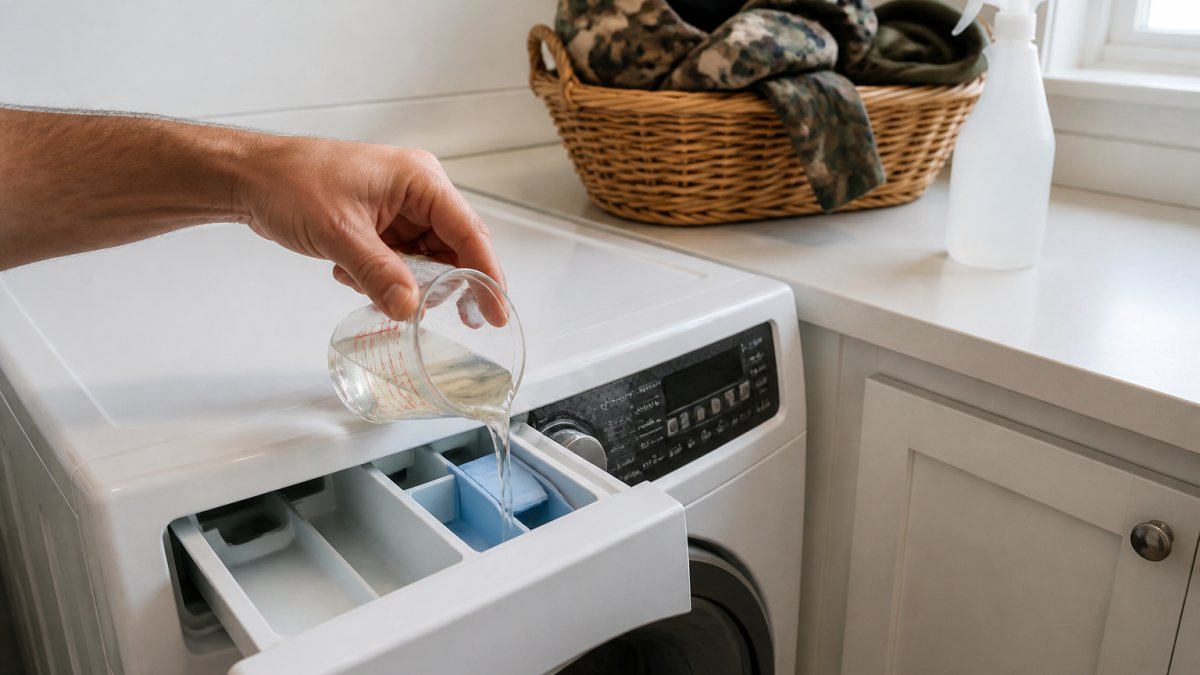
Vinegar is a common choice for fish smell in laundry, but the right dose and the right fabric matter.
Fabric |
Vinegar guidance |
Key caution |
|---|---|---|
Cotton and linen |
One-cup rinse or 30-minute half-cup soak generally safe |
Hot water fine if label allows |
Synthetics (polyester, nylon, spandex) |
Vinegar safe, but fibers hold odor longer |
Expect to repeat the soak; avoid high dryer heat |
Wool |
Cool, short soak with half a cup of vinegar |
No wringing; lay flat to dry |
Silk |
Dilute about a quarter cup per gallon of cool water |
Spot-test inside seam; keep soak under 15 minutes |
Delicates, rayon, dry-clean-only |
Do not soak |
Vinegar can weaken rayon and damage trims and dyes |
Why Clothes Smell Fishy After Washing
Clean clothes that still smell fishy usually point to the washer, not the shirt. But "the washer" is too broad to act on. The useful question is where the odor is coming from: the garment itself, the machine, the water supply, detergent buildup, or the dryer. Each has a different fix.
Diagnose the Source Before You Rewash
Run this quick check before you treat the shirt again:
- Smell the garment before washing. If it already smells fishy when dry, the odor is in the fabric.
- Smell it right after the wash. If it smells clean wet but fishy when dry, suspect the dryer or the air-dry environment.
- Smell a clean towel washed in the same load. If the towel also smells, the machine or water is the source.
Washer Odor, Residue, and Water Temperature
A front loader with a mildewed gasket or detergent residue can re-deposit odor on every load. Run a cleaning cycle on the drum. Wipe the gasket. Check the detergent drawer for buildup.
Something's Fishy - Extreme All Natural Deodorizer →
- Too much detergent: leaves residue that traps odor
- Cold water only: may not lift fish oils; use the warmest setting the label allows
- Overloaded drum: clothes cannot rinse clean
Water Supply and Plumbing
A fishy smell with no fish nearby can come from the water heater or home plumbing. If every load smells, not just the fishing clothes, run a glass of cold water and smell it. If the water itself is off, the washer is not the problem. Call a plumber before you treat another load.
Detergent Buildup and Dryer Odor
Detergent residue can trap odor and hold it against the fibers. Strip the garment by running an extra rinse, or use a washing-machine cleaner on the drum. On the drying side, a lint-clogged dryer or a damp dryer drum can leave a musty, fishy note. Clean the lint trap, check the vent, and air-dry fishy garments first, a clothesline beats a hot dryer for odor removal.
- Smell the garment while damp and again when dry
- Check seams, cuffs, and collars, where odor lingers
- Air-dry in sunlight if possible
How to Remove Fish Grease Smell From Clothes
Fish grease is oil, and oil needs a degreasing step before the regular wash. Skip the dryer until the grease smell is gone. Heat sets grease odor the same way it sets any other fish smell.
Follow this order for grease:
- Blot the grease with a dry towel
- Apply a small amount of dish soap to the spot, since it cuts grease
- Work it in gently with your fingers
- Rinse with warm water
- Wash with a heavy-duty detergent on the warmest safe setting
- Air-dry and smell the garment before drying
Repeat the dish soap step if the spot still feels slick. Grease that has set in may need two rounds.
Dry Thoroughly and Know When to Stop Treating
Drying is where most people undo their work. Air-dry fishy garments first.
Set-in smells may need a repeat treatment. That is normal. Work through the sequence again: soak, wash, air-dry, check.
- Smell the garment while damp and again when dry
- Check seams, cuffs, and collars, where odor lingers
- Air-dry in sunlight if possible
If three full treatments fail, the odor has likely bonded to synthetic fabric or padding. A professional cleaner may help. Some items are not worth saving.
For stubborn cases, consider a spray that is formulated to help neutralize odor-causing bacteria.
Shop Odor Eliminators Built for Fish and Gear
Laundry gets most of the odor out. A spray handles the rest: boots, gloves, bags, and the car seat that carried the catch home.
Spray it on clothes, shoes, and equipment after a trip. Check the Shipping & Return Policy before you order. The citrus scent stays light.
Something's Fishy - Extreme All Natural Deodorizer comes in a nice citrus scent for $14.99, 2 bottles for $24.99, and If you want a larger supply, the case of 30 is available.

Frequently Asked Questions
What neutralizes the smell of fish on clothes?
Acids and absorbents do most of the work. White vinegar and lemon juice counter the amines that create fishy odor, while baking soda and activated charcoal absorb odor-causing compounds. A heavy-duty detergent lifts the oils carrying the smell. An all-natural deodorizer spray such as Something's Fishy ($14.99) can be applied to clothing before rewashing as well to adding it as an additive to your laundry detergent to completey remove the smells. Wash separately, use the hottest water the care label allows, and dry completely before judging whether the smell is gone.
Should you dry clothes before the fish smell is gone?
No. Heat from a dryer can set odor-causing compounds into the fibers, making a second treatment harder. Air-dry the garment or line-dry it first, then smell it once fully dry. If any fishy odor remains, repeat the soak and wash cycle. Only move to machine drying after the fabric smells clean. This single step prevents many cases where clothes seem fine wet but smell fishy again the next day.
Can baking soda remove fish smell from clothes?
Baking soda helps by absorbing odor rather than masking it. Add half a cup to the wash cycle or make a paste with water for fish grease spots, then rinse. It works best alongside detergent, not instead of it, because detergent is what lifts the oils holding the smell. For heavy contamination, soak the garment in a baking soda and water solution for 30 minutes before washing. Vinegar and baking soda should be used in separate steps, not mixed together in one wash.
How do you get fish smell out of delicate or dry-clean-only clothes?
Check the care label first and skip machine washing if it says dry-clean only. Air the garment outside for several hours, then apply a light mist of an all-natural deodorizer and let it dry fully. Repeat if needed. If the odor persists, take it to a professional cleaner and describe the fish spill so they can treat it correctly. Never soak silk, wool, or lined garments in vinegar without testing a hidden seam first, since acidity can affect dyes.
Fish smell is a stubborn opponent, but it loses to a cold rinse, a vinegar soak, and patience with the drying step. Miracle Mist Inc. makes the after-trip part easier with all-natural deodorizer and anti-microbial sprays built for fishing gear, clothing, and vehicles. Get started with Miracle Mist Inc. and send the fish smell back to the water where it belongs.
